Community-Based Organization



For agencies serving older adults and people with disabilities, access is everything. However, fragmented systems, overlapping programs, and inconsistent messaging make it challenging for individuals to know where to begin, whom to trust, and what to do when seeking support.
The California Department of Aging (CDA) set out to change that by exploring statewide No Wrong Door (NWD) approaches to make it easier for older adults, people with disabilities, and caregivers to find and access long-term services and supports through any entry point. CDA turned to Collaborative Consulting to help translate its NWD aspirations into practical, achievable steps to lay the groundwork for future system-wide integration.
The California Department of Aging (CDA), California’s federally designated State Unit on Aging (SUA), operates under the California Health and Human Services Agency and administers programs serving older adults, people with disabilities, and caregivers. The department oversees Area Agencies on Aging, contracts with Multipurpose Senior Services Program agencies and Caregiver Resource Centers, certifies Adult Day Health Care Centers, and administers a Long-Term Care Ombudsman program with oversight of licensed facilities statewide. CDA collaborates with multiple state departments to advance its mission of supporting wellness, longevity, and quality of life for Californians through comprehensive service delivery and strategic partnerships.
CDA engaged Collaborative Consulting to design and advance its NWD approaches, clarify what is achievable, and define the steps needed to make progress toward a coordinated statewide approach. The project aimed to:
To transform how Californians access aging and disability services, we started with a plan anchored in what’s possible today. Collaborative Consulting assisted CDA in researching and designing priority approaches to lay the foundation for an integrated and accessible NWD system.
We began with research and discovery — analyzing federal guidance, reviewing promising practices from other states, and mapping California’s landscape across the aging and disability network. This revealed both the complexity of statewide integration and the strength of the systems already in place, including the state’s Aging and Disability Resource Connection (ADRC) network and services provided by AAAs, which connect Californians with local information and assistance. We also surfaced a central insight that lasting change would depend on strengthening what CDA could control today while preparing for more system-oriented reforms over time.
Informed by these findings, we formed three workgroups comprised of CDA leadership to design the following NWD components:
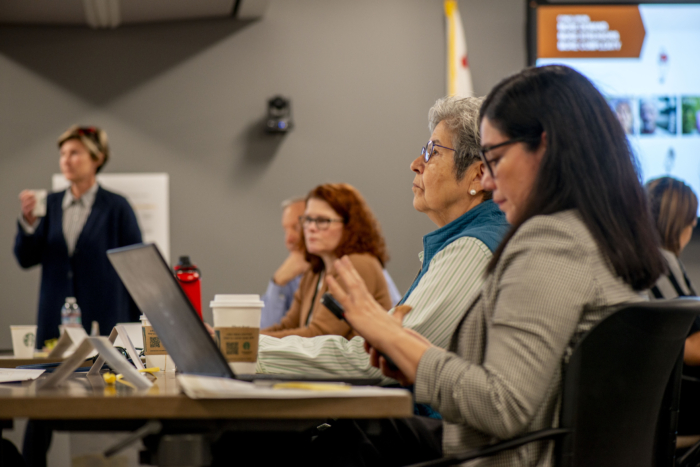
We facilitated bi-weekly sessions with each workgroup to advance the design of the foundational NWD approaches, giving CDA greater clarity on how to implement them in ways that reflect shared responsibility across multiple agencies. At the conclusion of the project, our efforts culminated in a transitional plan that provided CDA with a roadmap for continuing to refine and implement the approaches we designed together.
This project strengthened CDA’s commitment to improving how Californians find and access aging and disability services. By grounding the efforts in what was achievable today, CDA leaders now have a shared framework, a roadmap for getting started, and a foundation to guide future actions and investments.
Acting on the recommendations, CDA is taking essential steps to improve access, enhance efficiency, and ensure accountability through service model improvements and local capacity building. Their near-term actions include selecting a technical partner to develop the statewide consumer website and updating public communications about how Californians can locate and access aging and disability services.